
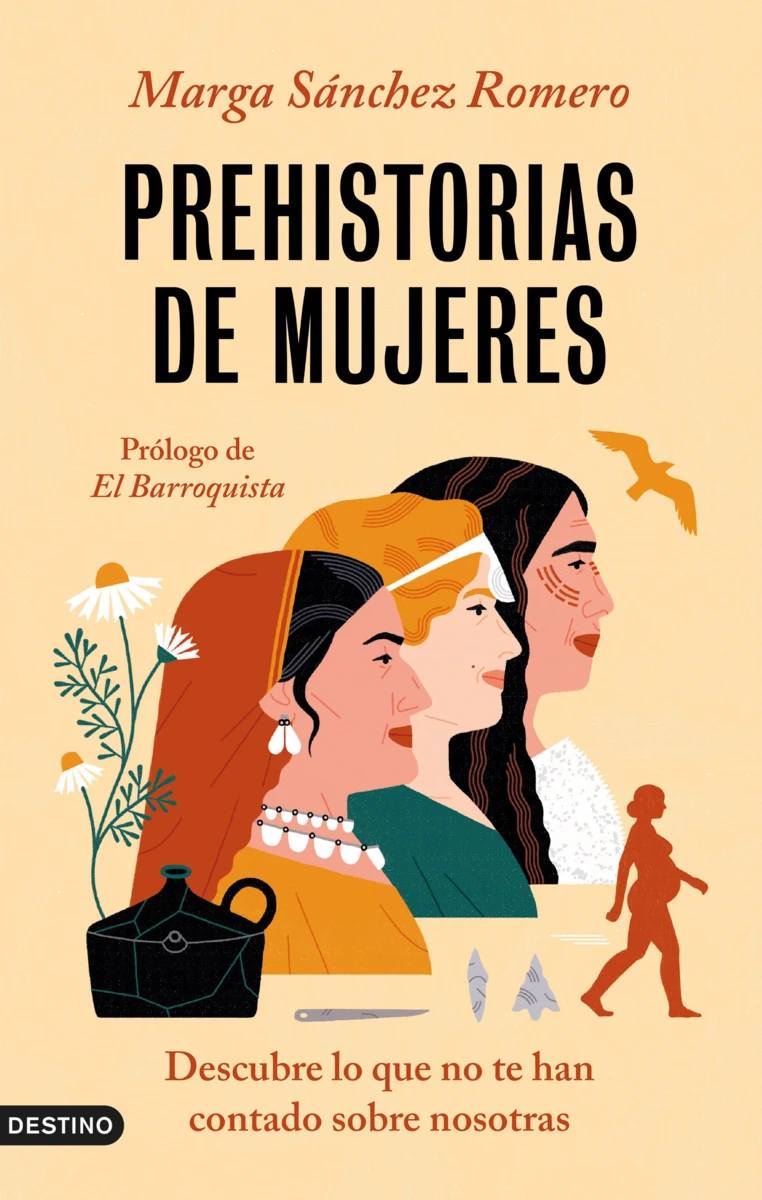
Prehistories of Women
Publishing date:11 october 2022
Synopsis:
The book that has revolutionized our view of women in prehistory.
What role did the first women play in prehistory? Were they really the ones who stayed behind to care for the offspring? What was motherhood and child-rearing really like? When did women start to lose power?
In the narrative that has been constructed about prehistoric societies, women have occupied a secondary role that science has not deeply sought to understand and explain until now, when feminism is reclaiming the fundamental role of women in history. This fascinating essay also reveals how the rise of archaeology in the 19th century as a scientific discipline shaped the perception of women and how this was used to justify inequalities. A book that aims to break myths, make us reflect on the origin of inequality, and uncover the essential contribution of our most distant ancestors.
A book that shatters myths and leads readers to reflect on their origins and the essential contribution of the first women in history.
A fundamental work on women and prehistory that once more shines a spotlight on the silencing of women throughout history from a feminist point of view, this time in prehistoric societies.
Technical Data
| Technical data | Publish date: 11 october 2022 ISBN: 978-84-233-6208-0 Pages: 288 Imprint: Ediciones Destino |
|---|---|
| Rights sold | AST (Russia) |
| Reviews | This isn’t a book about prehistory. Or about women in prehistory. We’re off to a good start, you’ll tell me. Actually, this is a book about women today and about how history and archaeology have stuck us in less visible and marginal roles, how they’ve defined us and led us to assume these roles are true. The premise I intend to put forward is very simple: women have participated in social, political, economic and cultural life in all societies throughout history. (...) In this book you will find a series of reflections on how women have been hidden or stereotyped in prehistoric societies, the reasons behind this biased view of women and, above all, how archeology, a scientific discipline that has lent weight many ideas that have historically justified inequality, is a brilliant tool to resituate us, see us, know us. |


