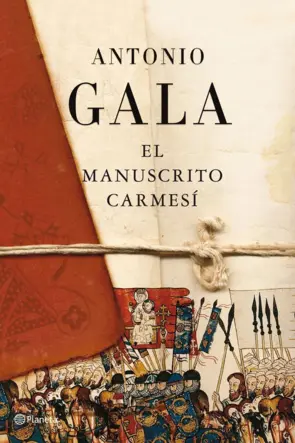
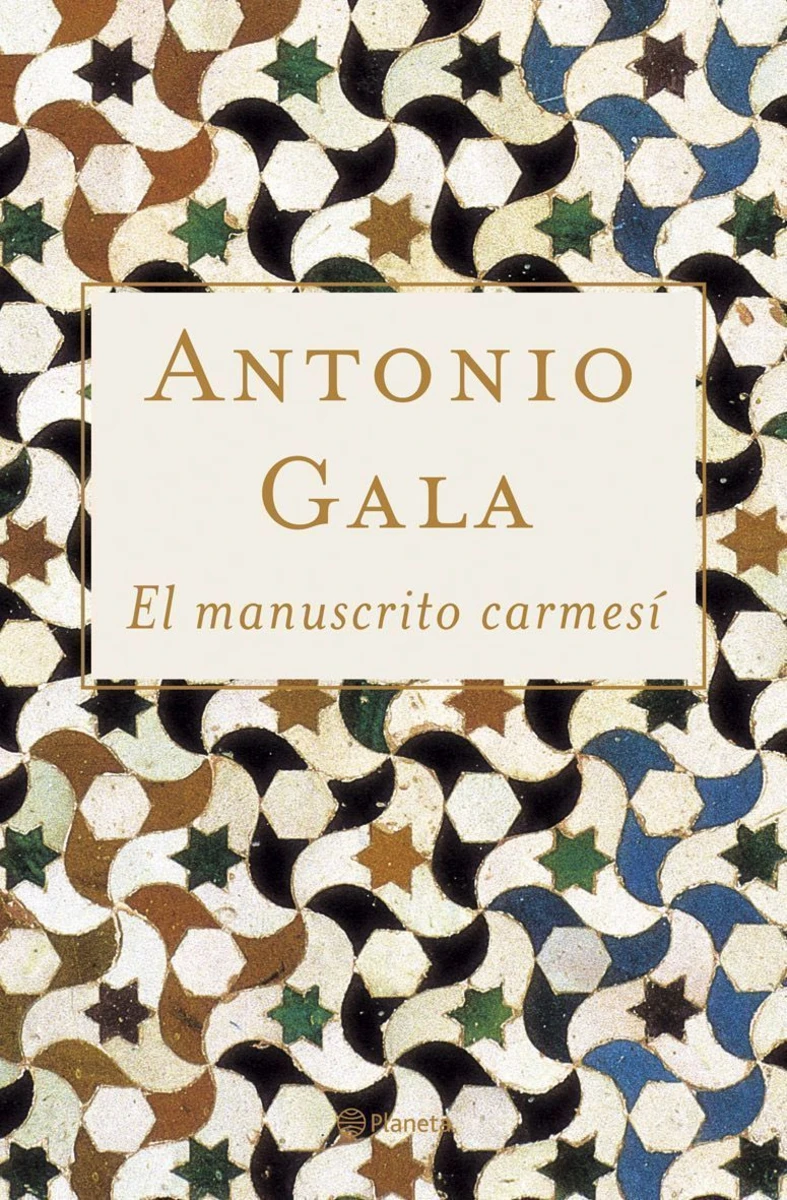
The Crimson Manuscript
Publishing date:1 june 2001
Synopsis:
In the crimson paper employed by the Alhambra Chancery, Boabdil, the last sultan of Spain, writes down the joys and sorrows of his life. His luminous childhood memories soon darken, when the weight of a shattered kingdom is placed on his shoulders. His refined education proves of no use for the demands of government, and his lyrically bent personality is crushed in the course of an epic story that charts an unavoidable defeat. From his quarrels with his parents to the deep affection he feels for Moraima and Farax; from his passion for Jalib to the ambiguous tenderness he feels for Amin and Amina; from his desertion of childhood friends to his distrusts of advisors; from his veneration for his uncle Zagal and Gonzalo Fernández de Córdoba to his abhorrence of the Catholic Monarchs Isabel and Fernando —Boadbil, aka “el Zogoibi”, “el Desventuradillo”, moves among a large cast of characters with uncertainty. The knowledge that he is living in critical times which will be his undoing makes him a bundle of contradictions. History, simplifying things, piled on him unfair accusations, as this honest and thoughtful tale reveals. The height of the Reconquista – with its fundamentalism, cruelty, treason and injustice – tears through his chronicle like a destructive tornado. His language is both intimate and straightforward: that of a father speaking to his children, or of a man adrift, destitute yet serene, who talks to himself in order to find a last refuge. Wisdom, hope, love and religion assist him only intermittently as he walks down the road of solitude. It is this helplessness in the face of fate that makes him a symbol for modern-day man.
Highlights
Highlights The Crimson Manuscript
Premio Planeta 1990
Technical Data
| Technical data | Publish date: 1 june 2001 ISBN: 978-84-08-06270-7 Pages: 610 Imprint: Editorial Planeta |
|---|---|
| Rights sold | Wydawnictwo Zysk i S-ka (Poland), Sairyu Sha (Japan). |